

Not a lot, when it comes to caring for patients.
Yet Scott Fracul does point to a distinction. And he’s grateful it exists.
“Anesthesiologists are more advanced because they have more education than I do. I really respect that,” says Scott, who is the Chief Certified Registered Nurse Anesthetist at Heritage Valley Beaver. “Practicing with them is really beneficial to our patients. Together, we make a great team.”
If you’re considering a future in either of those roles, it’s important to understand the subtle nuances so you can plan your educational journey accordingly. So as you read on, we’ll define their titles, their duties, and the training required to work in either field.
The Anesthesiologist
What is it? In simple terms, an anesthesiologist is a medical doctor, just like your primary care provider or a surgeon.
What does an anesthesiologist do? They are responsible for administering anesthesia to keep a patient from feeling pain before, during, and after procedures. They also monitor blood pressure, diabetes, and other conditions as they manage the medications.
What type of education is required? A Doctor of Medicine or Doctor of Osteopathic Medicine degree is necessary. When combined with undergraduate studies and residency training after medical school, their education takes about 12 to 14 years.
The Nurse Anesthetist
What is it? A Certified Registered Nurse Anesthetist is an advanced practice registered nurse.
What does a nurse anesthetist do? Like an anesthesiologist, a CRNA has specialized training to administer anesthesia that keeps a patient from feeling pain before, during, and after procedures.
What type of education is required? Scott says he followed the typical protocol to attain the status of nurse anesthetist:
- He earned a bachelor of science degree in Nursing while working full time as a registered nurse in a critical care unit.
- He completed 27 months of anesthesia school to earn a master’s degree.
- And finally, he had to pass a national certification exam for Nurse Anesthetists.
Scott’s Journey …
In all, Scott completed about eight years of schooling.
“It was the hardest thing I’ve ever done,” he explains, “but it’s the best thing I’ve ever done. It’s the most rewarding career. I love it.”
Scott had worked in the newspaper industry before pivoting toward nursing in his early 30s. He was married with two children when he made the jump.
“I remember getting home from clinicals around 6 o’clock, spending some time with my family, then excusing myself to study until I went to bed. On weekends, I would meet with a study partner. We would spend eight hours each Saturday, and eight hours each Sunday studying together.”
Would Scott advise others to pursue the same career path?
“Do it,” he responds matter-of-factly. “If I was able to make it happen, you can too. I just wish I would have done it sooner.”
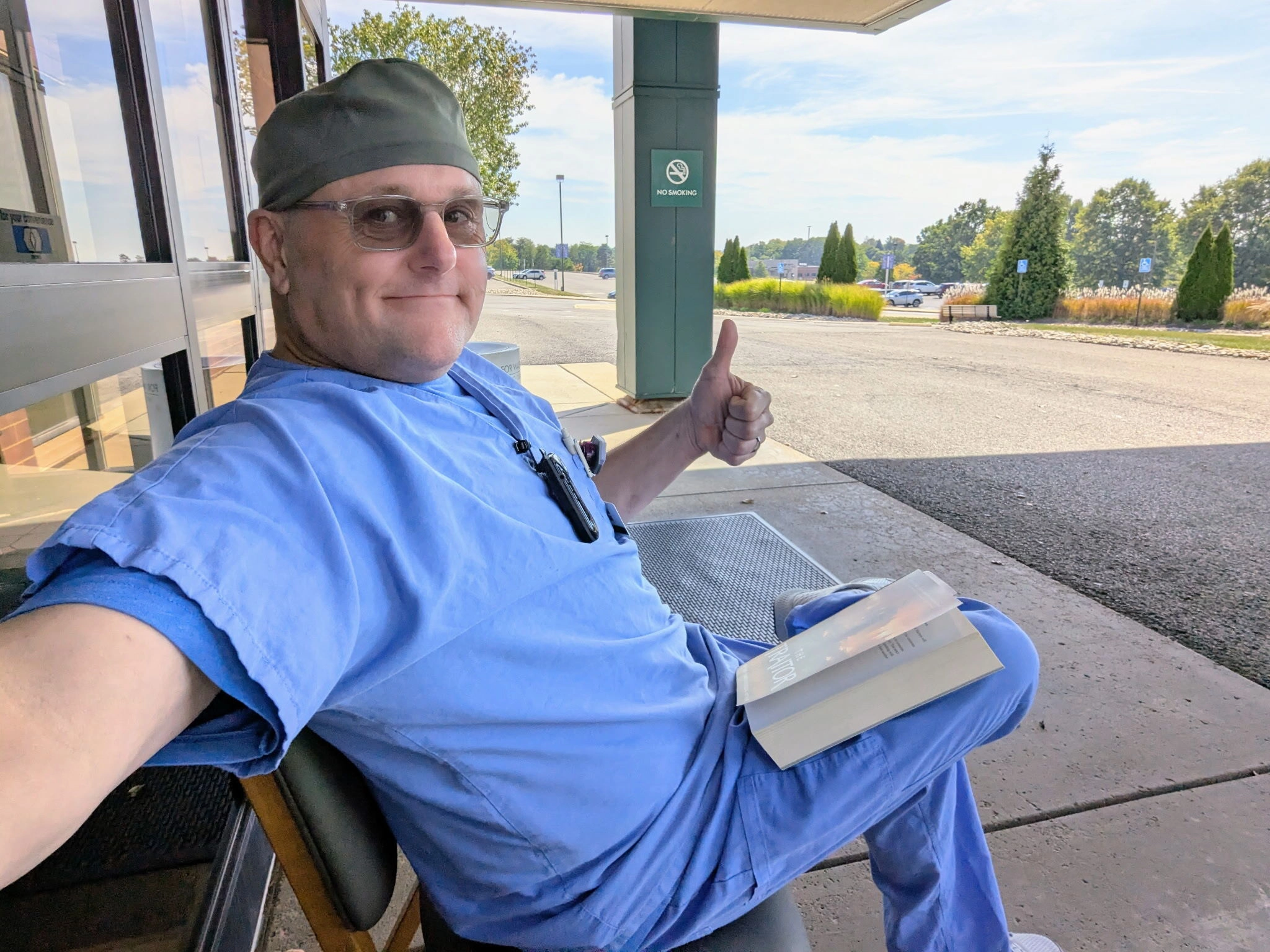
Scott Fracul pivoted from a career in newspapers to become Chief Certified Registered Nurse Anesthetist at Heritage Valley Beaver.
So, what's the difference between an anesthesiologist and a nurse anesthetist?
Again, while both provide similar care in the hospital setting, the difference between a nurse anesthetist and an anesthesiologist is their training: anesthesiologists are doctors and nurse anesthetists come from a nursing background. Depending on the state, Scott points out, a nurse anesthetist works under the supervision of an anesthesiologist.
“We basically have the same ability to conduct procedures,” Scott clarifies, “but only an anesthesiologist can prescribe medication.”
Oh, and there’s one more thing.
“My butt’s been bailed out by an anesthesiologist many times,” Scott emphasizes. “Practicing with them is really beneficial to our patients. Together, we come up with great solutions to help you.”
And we’re all healthier for it.
(Are you interested in pursuing one of these dream careers? Then take Scott’s advice and start your education early with prerequisites from Portage Learning. Initiating your studies online not only can save you time and money, but our asynchronous courses allow you to engage with the material on your schedule. Credits transfer to more than 2,800 institutions nationwide.)
Still looking for answers?
Check out the FAQs about this article below.


