

Crista Bush first wondered that in high school while visiting her grandmother in a rehabilitation facility after a stroke.
While there, she met the healthcare professional helping her grandma regain the skills needed for daily living.
And by the end of that afternoon, Crista got her answer and more. At age 17, she found the career she wanted to pursue.
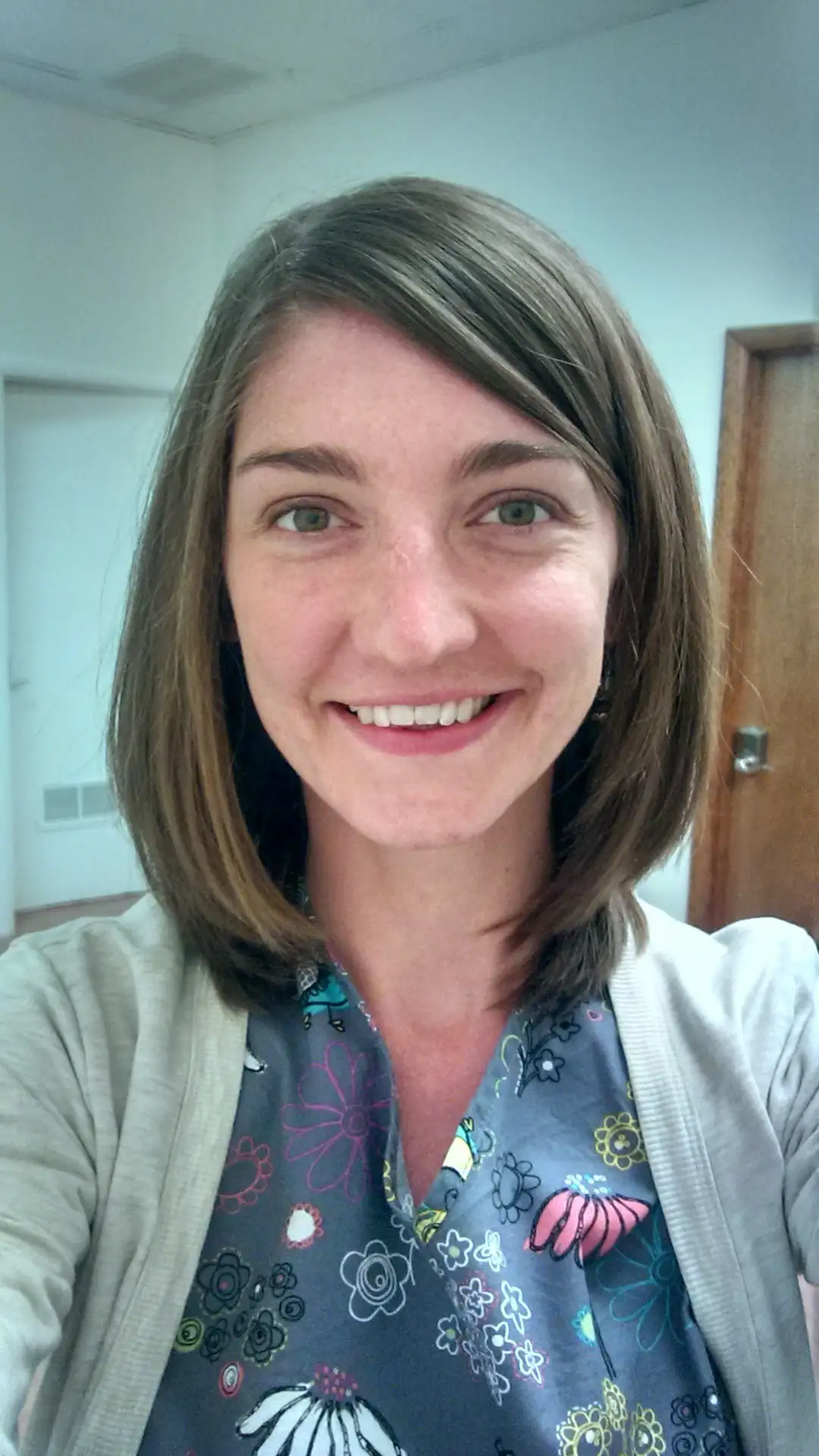
Crista Bush, Occupational Therapist
(The Practice explores healthcare careers through the people doing the work. In this installment, Crista Bush, MSOT and a biology professor at Portage Learning, answers common questions about occupational therapy and shares her message to other students considering the major.)
What is occupational therapy?
A lot of times in our society today, the word occupation means paid work. But in the sense of this job, occupation goes back to how the definition was first used, meaning anything that you do during your day, even in terms of leisure activities, getting dressed, eating, or taking care of kids.
We fill in the gaps left by other therapies. For example, physical therapy is very focused on specific movements and joints. Occupational therapists can take that movement and say, ‘OK, now that you’re walking, how can we safely apply that to your house? How can we make sure you can move around that environment while considering other factors such as your cognitive level.’
Why do people choose careers in occupational therapy?
My grandmother had a stroke when I was in high school. She completely lost the ability to move the left side of her body, and in my mind, I thought that’s just how it would be for the rest of her life.
But when I visited her in rehab, there was an OT who helped her gain use of her arm and leg. She started walking, and I was just blown away. The occupational therapist was knowledgeable and kind, too. She would share bits of information with me, and I was fascinated.
I decided I definitely wanted to do that professionally, so I started shadowing in a bunch of areas, which helped me figure out what I liked.
What degree do you need to become an occupational therapist?
Entry-level occupational therapy requires a master’s degree.
You could get a bachelor’s degree first then apply to a master’s program, which most people do.
Alternatively, there are a handful of three plus two programs, where, if you know for sure you want to pursue occupational therapy, you can combine your bachelor’s and master’s degrees together.
I went with the first option. The coursework is very heavy in psychology and biology, and I ended up double majoring in those subjects. I then got my master’s degree at the University of Pittsburgh.
Where can occupational therapists work?
I’ve worked in a few different areas.
I did some Alzheimer’s work for nursing homes, specializing in caregiver training. We created strategies that eased their jobs and made the patients feel more loved.
I’ve spent most of my career in outpatient pediatrics because I love working with kids and it covers a variety of diagnoses such as Down syndrome, cerebral palsy, and sensory processing disorder. I would educate families on how to do therapy at home or work with the child’s school to identify how they could improve there.
Currently, I’m working in a volunteer capacity. I’ve started a disability ministry that helps families be able to come to church with their kids. I’ve helped to train the church staff to make sure children with a disability feel comfortable and safe.

What are occupational therapist’s daily responsibilities?
It really depends on what area of practice you choose.
If you work in a hospital, those hours are Monday through Friday with standard work hours. You might have a weekend rotation.
Outpatient therapy tends to be more late nights because that’s when people are available after work. My hours would be more like 12 to 8 p.m. or 10 a.m. to 6 p.m. You don’t get weekends in that setting.
School occupational therapists would follow the district’s academic calendar.
The scope of practice will look different too but in general, you have a one-on-one evaluation with the patient and learn:
- Their occupational history
- What they like to do
- Their typical day
Then you come up with an intervention plan. That involves identifying goals and breaking out the steps to achieve them. We try to bring in their interests. Say you want to learn how to play soccer – then OK, let’s bring that into the session.
Interventions look totally different based on each person and that, to me, is the best part of the job. You get to be super creative.
The last part is evaluation. If you’re doing insurance-based treatment, you need to re-examine their progress every six months or so. You might need to adjust goals. It’s a constant fine-tuning process.
How do occupational therapists help patients in real life?
I worked with a lot of kids with sensory aversions to food and there was this one little boy who would only eat four foods. He really wanted to try new things, but it made him gag.
It was a long process, but we did play-based eating, and in a year and a half we added five new foods. He gained weight to get up to the minimum acceptable weight. With every new food, we threw a big party. His mom said it made life at home so much easier. They were also able to go out to restaurants sometimes.
You don’t think adding a few foods would make a big difference, but it really does – and in a practical way. I love being able to help families do normal things.
Is occupational therapy a stressful career?
The responsibility feels really heavy sometimes.
You have families coming to you with all their hopes and dreams, and you’re not always sure you can make a difference with a child and their case. Sometimes you don't see the progress that you would like to, or things don't turn out exactly as you expect.
You need to collaborate with others, be humble, and recognize that you aren’t necessarily going to have all the answers, but your focus should still be on the little things that you can do.
Occupational therapy requires lifelong learning. There’s always something to research and study with each patient.
Why is occupational therapy important?
I had never even heard of occupational therapy until I accidentally stumbled upon it.
But it’s exciting because it actually makes a difference in people’s lives. I’ve worked with doctors and educated them on the importance of occupational therapy. I’ve helped them recognize the value in the intensive evaluations, specific tools, and time that we have to help a patient.
Occupational therapy is a neat position to help bridge the gap and get everybody on the same page. Like let's be in communication, and we can help make sure that each person is cared for and looked at from a lot of different angles.
It's super individualized. Each client that comes through, they get their own evaluation, they get their individualized treatment plan, and we're looking at their specific goals. What is it that they are wanting to do or needing to do? Or what is it that is important to them?
(Interested in becoming an occupational therapist or exploring other healthcare careers? Portage Learning offers online, self-directed college courses that help you affordably complete the prerequisites needed for your program. Credits earned transfer to more than 2,800 institutions. Register today and start tomorrow.)
Still looking for answers?
Check out the FAQs about this article below.
FAQs - Frequently Asked Questions
What is an occupational therapist?
An occupational therapist (OT) helps people build, regain, or improve the skills that are needed for everyday living. This includes getting dressed, eating, or taking care of kids. They create personalized treatment plans to help patients become independent.What degree do you need to become an occupational therapist?
To become an entry-level occupational therapist, you need a master’s degree. The most common route is getting a bachelor's degree and then applying to a master's program. But for those who know for sure they want to pursue occupational therapy, there are three plus two programs where you can get your bachelor’s and master's together.Where can occupational therapists work?
Occupational therapists can work in a variety of settings, including:- Hospitals
- Schools
- Rehabilitation centers
- Outpatient clinics
Some occupational therapists can specialize in certain areas, like mental health or geriatrics.


