
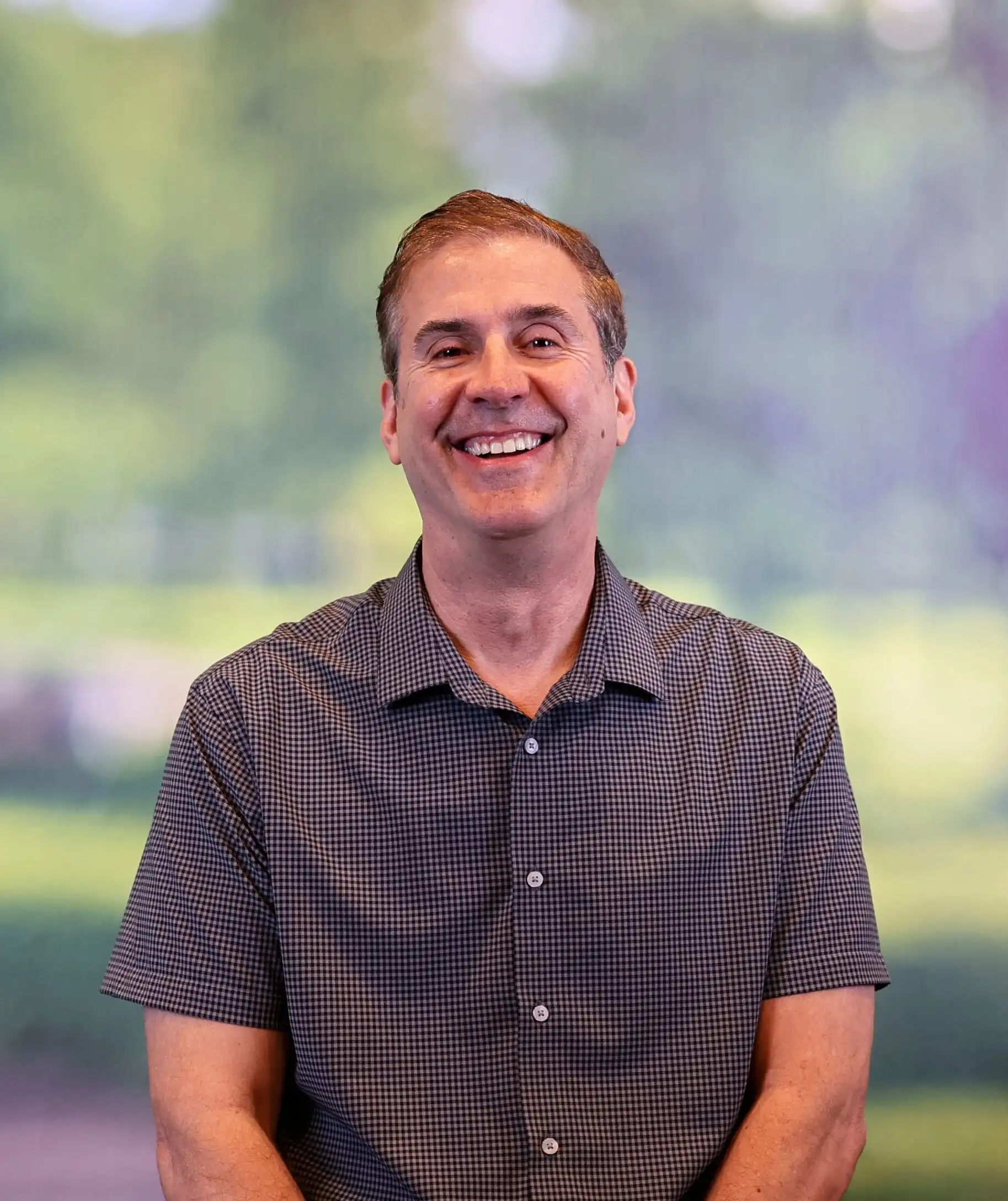
(Each “Talk of Ages” interview features prominent professionals in their 70s and 80s who share the timeless wisdom of a life well-lived. In this installment, Portage Learning founder Dr. Ken Hartman reflects on his love for teaching, his devotion to his wife, his fascination with the game of baseball, and reveals how he would like to be remembered.)
Chemistry.
It's at the heart of every thriving relationship.
It’s in the locker room of every championship franchise.
It’s in the boardroom of all successful companies.
And it’s what propelled a “very average student” into a career path he never expected — and one most people can only dream about.
“I know I'm the founder of Portage Learning but it really just happened,” says Dr. Ken Hartman, munching on a cherry danish at a local restaurant. “The Lord did it all through me. When I look back at what I started doing, teaching 15 ladies chemistry in a classroom at Geneva College two nights a week …”
His voice trailed off and he shook his head.
“This is just truly amazing. It really is.”
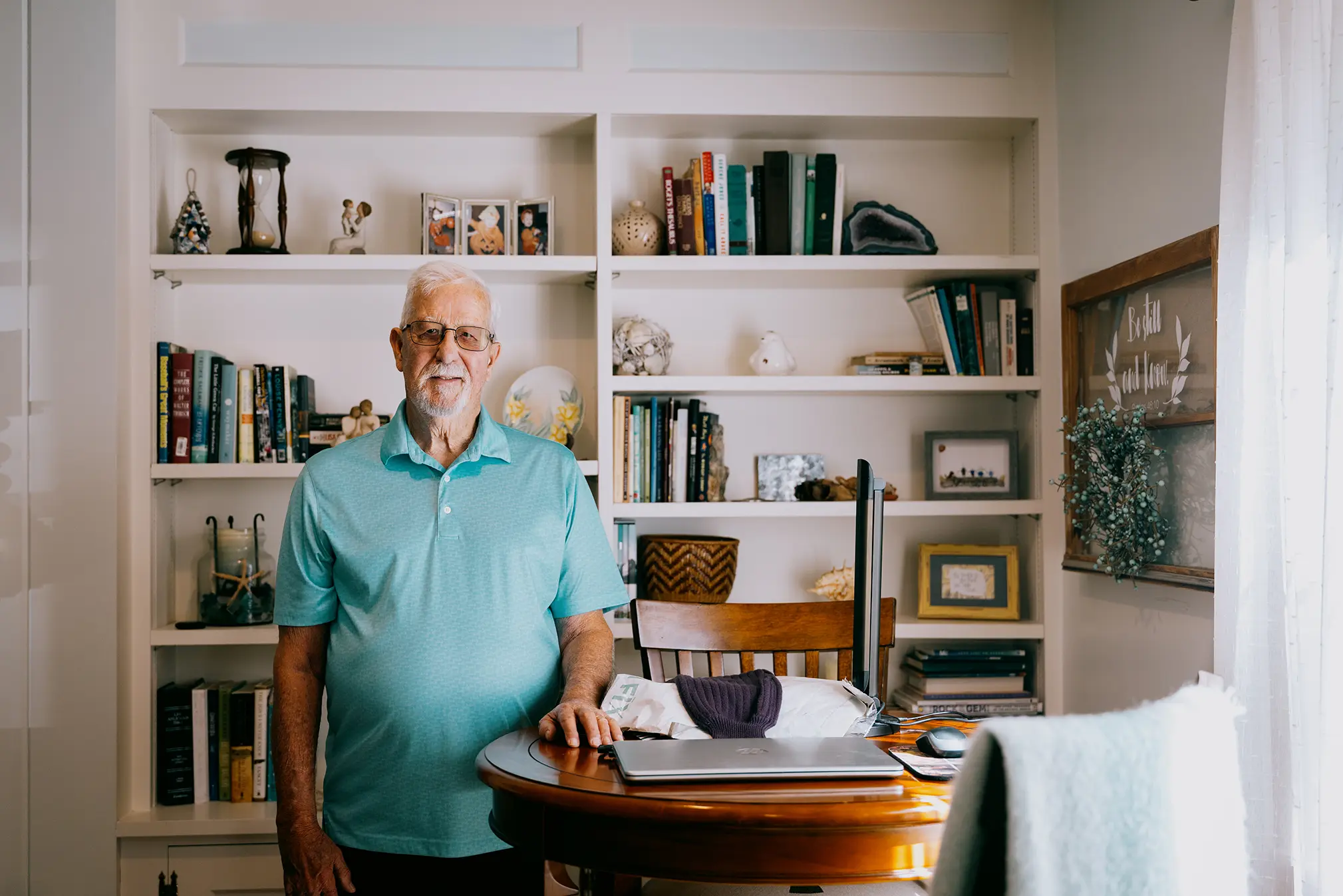 More than 50 years after answering the call to teach future nursing students, Dr. Ken Hartman continues to serve as chairman of the board of Portage Learning.(Photo by Yucheng Jiang)
The year was 1972. The day? Most likely a Friday. The phone rang late in the afternoon, around the time most people end their shifts. Ken Hartman didn’t know it yet, but a new shift in education was about to begin.
Marilyn Jasper was on the switchboard and directed the call to Ken, who was in his fourth year as a chemistry professor at Geneva, his alma mater. He was in his office on the second floor of the old science hall on campus.
“She had to send the call to me,” he says, laughing. “No one else was around.”
On the other end was the director of Jameson Hospital’s school of nursing in New Castle. There were 15 women who wanted to enter the program but they didn’t have an adequate background in chemistry. Was anyone available to teach them?
“Sure,” Ken told her. “I’d be glad to do that. Just give me their names and contact information. I’ll call them and set up a class.”
Ken designed the high-school level instruction to be practical and impactful, but the director and the students had another word for his lessons — “superior.”
“I really believe the Lord put me on this earth to be a teacher. I would like for my tombstone to read: ‘He was a caring father, a caring husband, and a good teacher..."
Word began to spread and demand for his services exploded. During the late 1970s and through the ’80s, Ken began to videotape labs with a camcorder and mail them to his students. A decade after, he would start using email, attaching curriculum and exams that could be returned to him for grading.
“That’s when the real distance learning started,” Ken recalls. “By using email, I could save our students all that travel back and forth to see me at Geneva. And that’s how Nursing ABC began.”
Nursing ABC — a name coined by Ken’s wife, Dee, because her husband was teaching Algebra, Biology, and Chemistry to future nursing students — became incorporated in 2005 and was accredited by the Middle States Commission on Secondary Schools.
“We may have been the first one accredited as a supplementary education organization,” Ken explains. “We really wanted that to let our students know they were in a good quality program.”
Around that same time, personal computers and the Internet began to enter homes across the nation. Nursing ABC was ready to enter a new space as well — offering all courses, including labs, online. When registrations began to swell, Ken called on one of his former students named Riley Hoselton to jump in and teach. Soon after, Elaine Frey joined the faculty.
Ken’s son, Nate, had created a website for an organization he had started called
the National Christian School Athletic Association. So, it made sense for him to become Nursing ABC’s first webmaster. Soon the ever-expanding enrollment necessitated a more adaptable web experience for students and Ken enlisted the services of Spire Advertising in Ashland, Ohio.
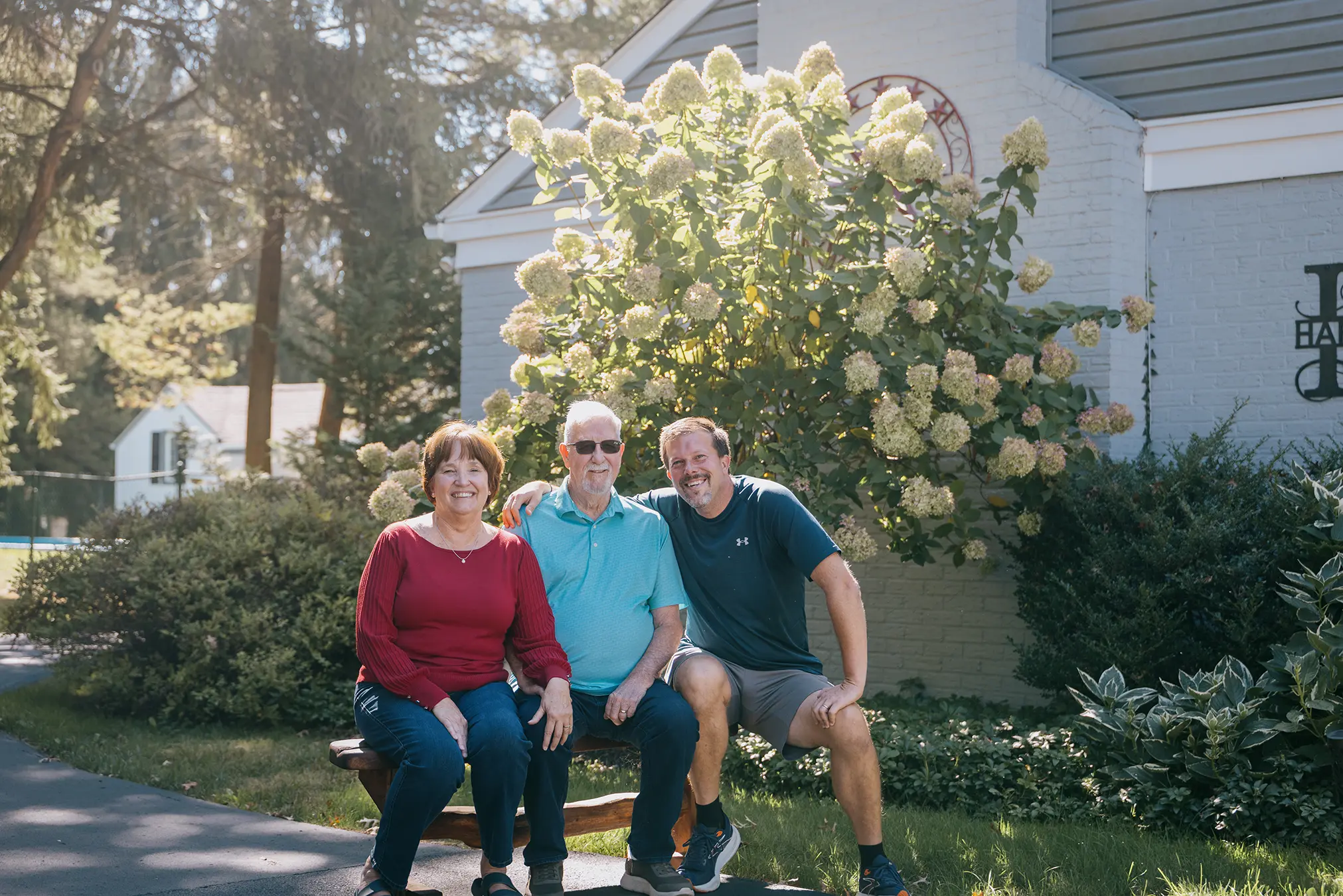 Ken and Dee Hartman with their son, Nate, who was Nursing ABC’s first webmaster.(Photo by Yucheng Jiang)
Ken’s daughter, Libby, and her husband, Steve Michalik, were helping to teach chemistry courses and Nate’s wife, Kara, was involved in teaching algebra, so the program was very much a family affair.
A new government mandate to extend the length of education for nursing candidates presented another opportunity for Ken and his growing team — to start offering college courses. Because of its secondary accreditation, NursingABC would have to partner with a four-year institution to make it happen. Ken pitched the idea to administrators at Geneva and a new entity was born – Portage Learning. “Nursing ABC is the name of the company, Portage Learning is how we deliver the college courses,” Ken explains. “Spire Advertising came up with the name Portage, which means to carry a boat from one body of water to another. That fit with how we carry students to their next program.”
How many students could Portage Learning carry to their next program? Ken actually had an ambitious number in mind for the first three years of the partnership.
But alas, as year three rolled around, Portage Learning did not enroll that many students. Instead, it had TRIPLED the total he anticipated.
Ken smiles again.
“I know I’m credited with being the founder, and I’m fine with that. But I have to give a lot of the credit for what Portage Learning has become to Steve.”
In 2020, Michalik would ascend to the role of president.
“Steve is the one who really had the vision for what this could become. His mind and his abilities are just tremendous in those regards. I told him I shouldn't be leading this anymore. You should. And I'm ready to kind of move aside.”
Today, more than 50 years after answering the call to teach future nursing students, Ken serves as chairman of the board of Portage Learning, which continues to experience massive growth. The institution’s goal of surpassing 1 million registrations in the next decade no longer seems to be a stretch.
“When I look back at the beginnings of this, there’s no way I can attribute it to myself. I started this because I was a teacher. I did not have the ability to do this. This has to be the Lord’s doing.”
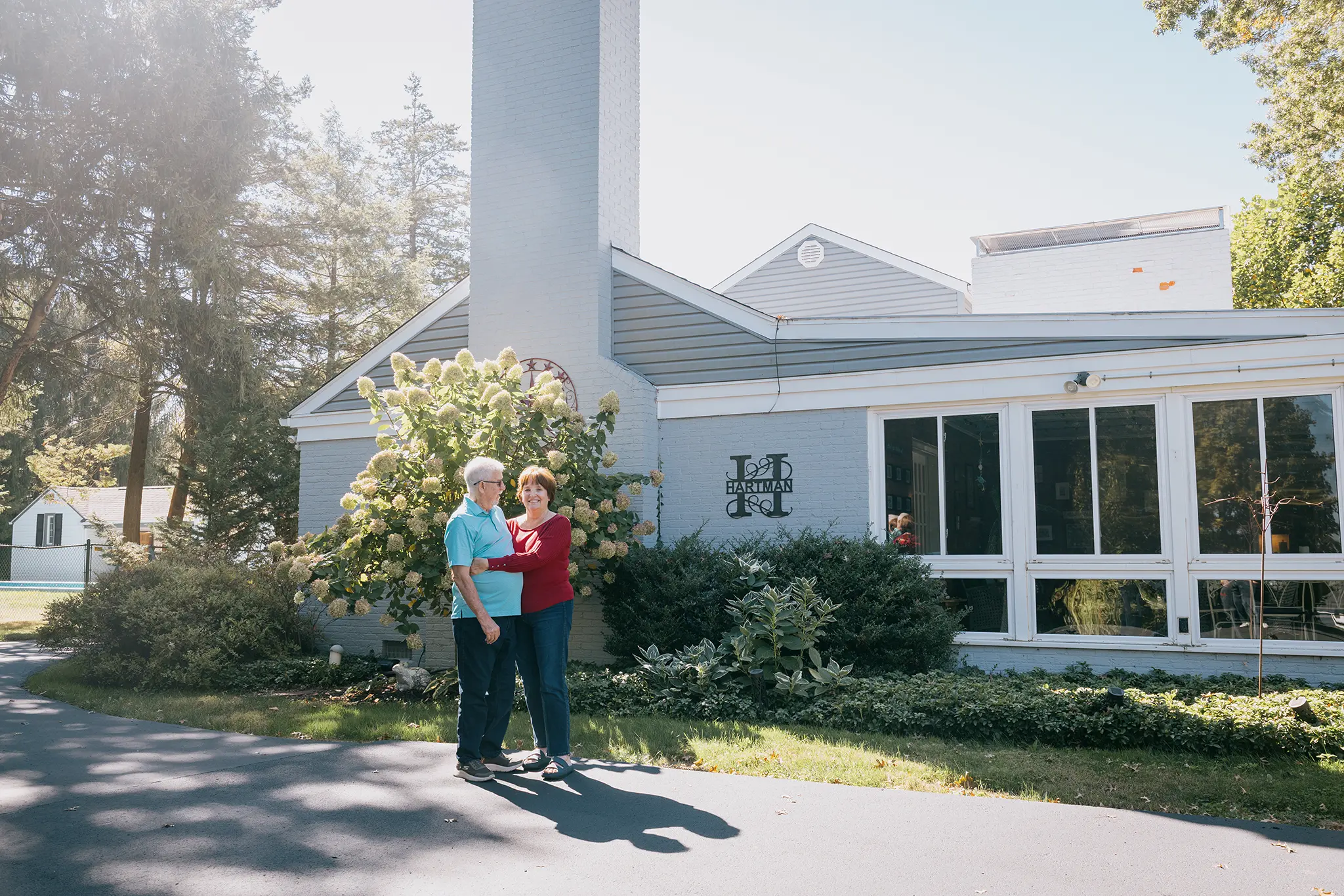 Ken and Dee Hartman outside of their home in Beaver County PA.(Photo by Yucheng Jiang)
What was your childhood like?
Kenneth Eugene Hartman was born in Johnstown, Pa., on December 6, 1942. “My name means handsome and well-born, and I was neither.” (Laughs) “I was raised in a tiny little town called Riverside, just outside of Johnstown. We had a nice, two-story house. I had two older sisters and two younger brothers. I remember my dad initially sort of working a nothing job. He was a watchmaker. He learned the trade by getting a job. But it's not what he did for most of his life. He was a very intelligent man, short in stature. When I was going into sixth grade, we moved to Bellevue, Pa., so my dad could get a better job. He became a self-taught engineer. I was a pretty skinny, quiet little child. I remember clear up through high school I was the second shortest in our class and that was only because we had a kid named David in the class who was very, very short. My dad had a big garden behind the house and he had this little kitchen garden up near the house. He would let my brother and me do some work in the garden. That's where I think I developed my love for gardening. I still love getting my hands in the dirt now.”How did you end up attending Geneva College?
“I was the first one in our family to really go to college. I think my dad was pushing me to go. I liked chemistry, and I wanted to do more of it, and I knew that meant you go to college and get a degree. I was a very average student in high school. And so to get into college, man, I was going to struggle. I applied at Pitt. I applied at California University of Pennsylvania. I got rejected at Pitt, and I got accepted at Cal. But it was far from my home. I had a Sunday school teacher whose name was Art Contag. He was born in Ecuador, but he had come to the U.S. to study biochemistry out on the West Coast in one of the California schools and he came to Pitt to do a postdoc. He found out that I was interested in chemistry and encouraged me to apply at Geneva. I'd never heard of it. He said, ‘It's a Christian college. That's where you ought to be going to school.’ So I applied. I got accepted to Geneva one week before school started. Probably one of the last people they accepted. And I did a lot better in chemistry than I ever did generally in high school.”You earned a PhD at an Ivy League school, correct?
“I was a little bit above average in grades at Geneva. I didn't know I wanted to go to grad school when I started there, but I had a really great set of professors. They all pushed me to go. So I applied at Purdue University. I applied to Oregon. And I applied to two East Coast schools, Penn and the University of Delaware. Kind of sounds like, ‘Why in the world Delaware?’ But my organic chemistry professor had gone to school at Delaware and said it's a very good program. So I applied there. I was turned down by Oregon and by Purdue, then I got accepted at Penn. And I accepted their offer right away because I didn't think I was going to get accepted anywhere else. … So I ended up at Penn and earned my PhD there (a common route for chemistry students is to go from bachelor’s degree to PhD.) That’s where the Lord wanted me. You're going from this kid that graduated from little schools, grew up in little towns, and he'd go off to Philadelphia to go to grad school. And that was a big awakening. And that's how I went to an Ivy League school. My grades were very average at Geneva, but I I did better at Penn.”What was your first job after leaving Penn?
“When I was getting ready to graduate from Penn, I had job offers to work for two chemical companies in research. One was up in Buffalo, and the other was the company my dad had worked for, Koppers, a research lab out in the Monroeville area. I got those two acceptances, and then I got two academic offers. One was at a school near Philadelphia, and the other was from Geneva. So I had these four positions to decide between, but I think I chose Geneva because it was home, and it was a small college. At that point in life I was convinced I wanted to teach. So, I came to Geneva.”What did that initial experience teach you?
“Well, I knew I was in the right place, because when you make decisions like that, you're not always convinced. You know, you have this feeling, you want to go do that. But I learned that it was the thing for me, because I got so much less out of doing research than I did from teaching people the fundamentals of chemistry. I think that's what drove me as a teacher. It was helping people get to that level where they weren't just memorizing facts. They were understanding why those things were the way they were. And I'm sure that's what kept me teaching for 37 years.”What was the kindest thing someone did for you as you were coming of age?
“When I came to Geneva, I had no idea what college was about, and I had no idea how to pay for things. I mean, my dad was putting me through school. He paid my tuition and fees. Credit cards weren't a thing then. I had just brought a check along that my dad had signed and he had made out. We had a pretty good idea of what it was going to cost in tuition and fees, but I didn't think about paying for books, and neither did my dad. Well, now I have to go get books at the bookstore and I have no idea how I'm going to pay for them. I didn't have the money. And there was a guy, he was the business manager at Geneva then. His name was Robert ‘Bob’ McConaghy. He was a big, kindly man. He paid for my books out of his own pocket. Of course, we paid him back. But otherwise I wouldn't have been able to get books to go to classes. That’s a great story I remember very distinctly.”Where have you seen the greatest transformation in your life?
“Oh, wow. I was not a real grown-up kind of person when I came to Geneva. I didn't think very much of myself. Frankly, we had a father who was not a great father figure. He taught us how to be responsible workers, but he wasn't much of a relational guy. So I didn't have much of that in my character, and I had to learn it, and I learned it sort of the hard way. So that was pretty transformative in my life, and I give a lot of the credit for that to my wife and our relationship.”What personal trait are you still working on today?
“My wife will tell you that I have a tone of voice. We call it the Hartman tone of voice. My father had it. I have it. One of my brothers definitely has it. My sister had it. And it's kind of when you don't think before you speak. It's that kind of thing, where you just let go. And I've got to be very careful. Because my wife will tell you every once in a while it still comes out in me. Well, it was always there in me, but my dad really aggravated it. He could be belittling. He just didn't think much of what you were doing or who you were. And that can come right out of me if I'm not careful. I'm still working on that and will to the day I die, I'm sure. Because it's just something that's in me. And I have to think, ‘Wait, this person's not trying to do me ill there.’ I have to think about it. That's something that can very easily come out of me. I don't have much trouble with people I work with. It's more often people who are very close to me. Mostly my wife, I would say.”At what point did you realize you had what it takes to become successful?
“I think it was probably during my tenure at Geneva. I had recognized myself that I was finally capable of doing something and that it was useful. I was really accomplishing something when I was teaching my students. It was a really good feeling to have the students learning and recognizing me as a good teacher. And I think I started to realize, ‘Well, I guess I am pretty good at that.’ I've had some recognition for teaching over the years, but that’s not what brought me to that realization. It was the students coming back and saying, ‘Yeah, I understand that.’ To understand a complex idea you have to connect it to the basics because that's where it comes from. So I tried to make connections for my students because I had to do that for me to learn it and for me to understand it.”If you could go back to any age, what age would you go back to?
“Wow. I'm not sure I would. I think I'd stay right where I am. It's just a very nice place in life where, you know, the Lord's done a lot of good work in me to get me to where I am. I'm not sure I'd want to be anywhere other than where I am now. Children and grandchildren and friends and colleagues and a wonderful wife. Yeah, life's pretty good right now.”If you could go back and change anything, what would you change?
“Yeah, I'd definitely change some things. I'd have to ask the Lord to change that spirit in me that I don't like. He's taught me a lot of good things through it, but it's a side to me that I just don't like. And it's not an easy thing to shake. You just have to keep reminding yourself, you know. That's the one thing I'd change in me if I had my way.”What issue did you once feel really strongly about, but as years passed you've changed your mind on?
As a kid of the fifties and the culture of “Father Knows Best,” I believed very strongly that women should not work outside the home as long as there were young children. My wife wanted to be home with our kids and I think we felt we were doing it “right.” This belief was an influential factor in Portage Learning providing classes that gave women access to education from home, and we found that in choosing faculty, there were many qualified women who wanted to be home with their children but also desired the growth provided in teaching. My “right” opinion has changed quite a bit. I would still hold to the belief that a mother’s presence is very important to young children. However, I have seen many success stories where families balance the work of parenting and employment with maximum involvement of both parents. I believe this has been possible because our culture has recognized that the influence and hands-on presence of that dad is also extremely important. As Christians, this kind of home would be possible only if both parents respect the gifts of each other, and desire to serve as Christ has called them.How do you define lifelong learning?
“One thing I’m not particularly good at or fervent about is reading Scripture, and I think lifelong learning stems from that. It has to stem from tying those biblical principles into what you're doing. And just continuing to work on the areas in your life where you're not where you ought to be. I recognize I'm not a finished product. There’s still lots of things to learn about how you treat people and how you interact with people. And I think too many of us walk around with traumas that we haven't dealt with. I mean, it's just the shame of a trauma happening to you and then you're not dealing with it. Or the trauma happening to you and not dealing with it because of the shame associated with it. So, I mean, lifelong learning is in a lot of areas. You just keep striving to make better application of what you're doing. It’s just taking what you've been taught and using it to make things better.”What do you celebrate most about your life?
“My family. The fact that my wife and I, through all of our deficiencies, we've raised two kids that are doing useful work in the world. They’re certainly not perfect — none of us is perfect — but Libby and Nate are living Christian lives. I'm happy that I've been able to be a good father and a good husband in spite of a lot of mistakes that I've made. A good grandfather, and maybe one of these days a good great-grandfather. I love that my grandkids call me Poppy.”You and Dee were married on March 17, 1967. Wow, that’s nearly 60 years ago. What is the secret to a long and vibrant marriage?
“It's hard work. It's a lot of misunderstandings and a lot of not doing the right things. But I realized that Dee is probably the most important influence that has ever occurred in my life. Not my mother or my father. Not any teacher I have had. I mean, she's been the biggest teacher. The Lord knew that we were supposed to be together. That's why I ended up in Philadelphia in a Christian Missionary Alliance church when I could have been anywhere else. And, you know, she has put up with my faults and has loved me in spite of what I was sometimes. She's just learned to love me and live with me because deep down inside we're not always what we might appear to be on the outside. Neither one of us were raised in families that were particularly great. She had a mother and a father that I'm sure were not looking to build a family. I’ve seen many times that they didn't really care much at all about her. The Lord got her through to adulthood where she could meet me. But I had a mother, I think, who cared deeply about me, but not a father who did. Dee’s mom left her first husband and got divorced from her second husband, who was Dee’s father. I think they may have been good examples for us of what not to do. But I think we learned from their mistakes and we fought through some really bad times in the beginning to get to a point where we recognized we loved each other. There was nobody else that we were looking to. We got into good churches and I think learned things along the way through the work of those churches. And we both loved the Lord. I think that's a lot of what's helped us to learn how to be a good husband and wife together.”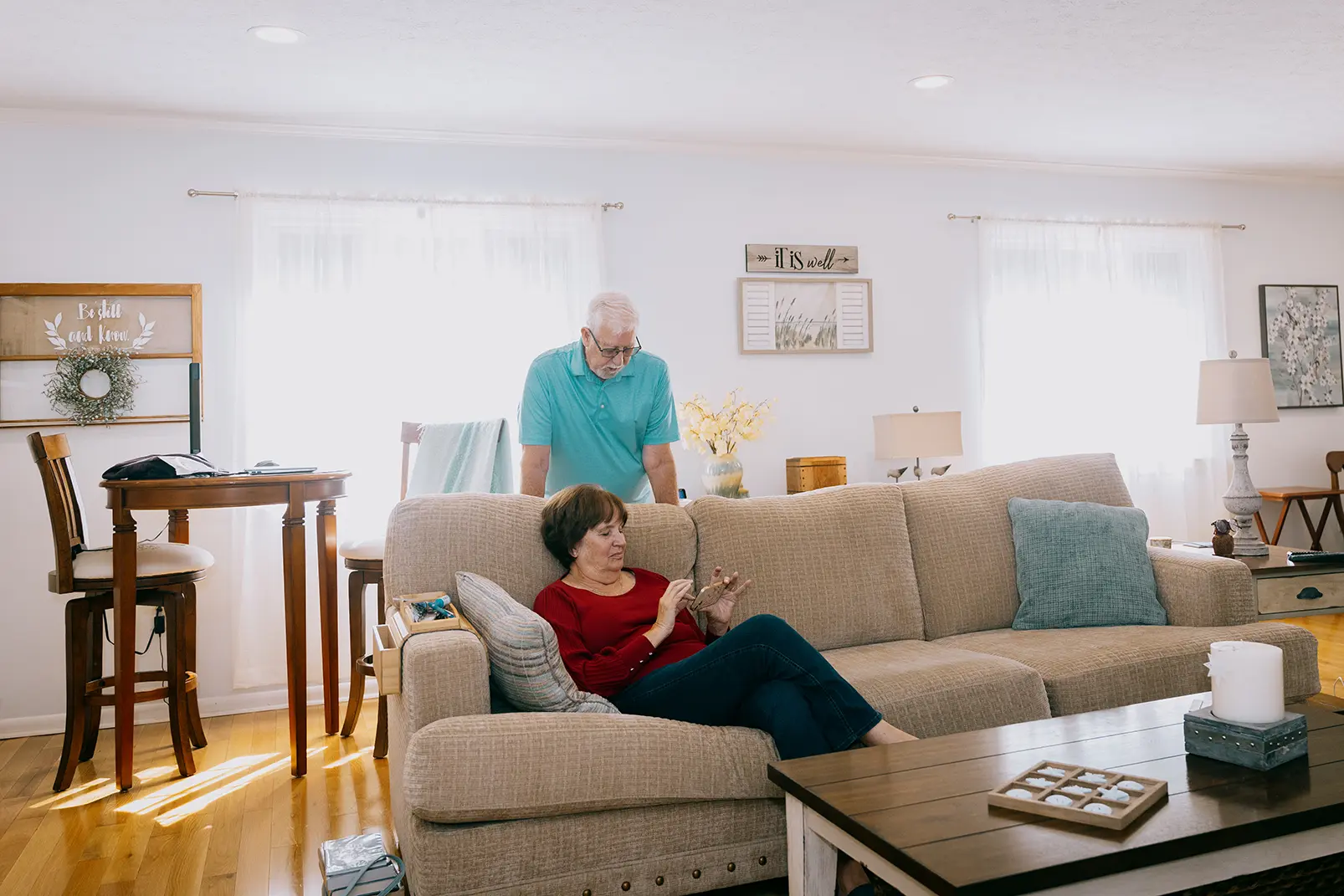 Dr. Ken Hartman and his wife, Dee, peruse some family photos on Dee’s phone.(Photo by Yucheng Jiang)
Do you have a favorite film?
“Yes, the movie ‘Field of Dreams.’ It’s my story as a kid, really. I loved baseball when I was a kid, but my father and I didn't have a relationship. He didn’t have the time to spend with me. I would have given anything to just play catch with him, like they did in that movie.”What is your most treasured possession?
“I have this thing at home that Dee had made for me. I had collected the trading cards for every Pittsburgh Pirates player during the 1960 season. That’s the year they beat the Yankees in the World Series. So I have a card for every player who appeared for the Pirates that season. How did I know all of them? I looked them up on microfiche from old newspaper articles. One of them didn't have a card available. His name was “Vinegar Bend” Mizell. But he had one off of a cereal box and Libby found it. It had been cut off the cereal box and it was offered for sale somewhere on eBay or something. So this thing is three feet across, five feet tall, and it’s framed. Each of the cards is in there. It's hanging in the hallway that goes back into our bedroom. One side is all pictures of family. The other side's all my baseball memorabilia. Nate bought me a bat signed by Bill Mazeroski. He’s the guy who hit the home run to beat the Yankees. I’m not sure if it would be my most valuable possession, but it’s neat. It’s one I really appreciate. It really means something to me.”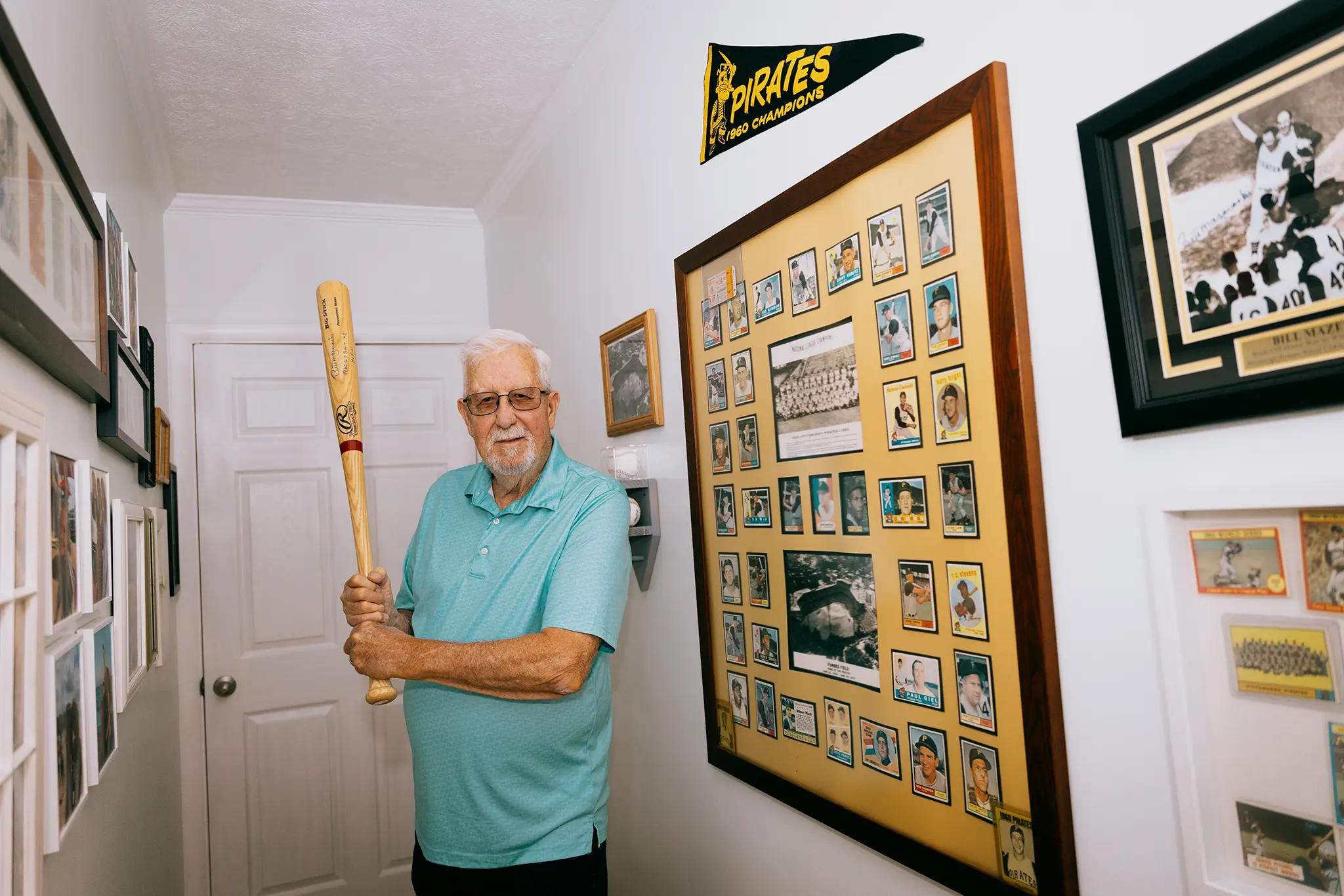 Dr. Ken Hartman has had a lifelong love affair with the game of baseball, and he calls a framed collection of trading cards from the 1960 Pittsburgh Pirates one of his prized possessions.(Photo by Yucheng Jiang)


